
Consider the Birds
Birding as an attentional—and spiritual—practice, with Ragan Sutterfield

Over the next several weeks, as I do a little of my own resting in July, I’m inviting other writers into this space. Last week, Alyson Pryor shared about the spiritual discipline of rest and retreat.
This week, I’m asking Ragan Sutterfield, author of Watch and Wonder: Birding as a Spiritual Practice, to tell us more about this habit Jesus himself seems to have recommended in his most famous sermon. Comment on this post, and you’ll be included in a drawing for a free signed copy of Ragan’s book!
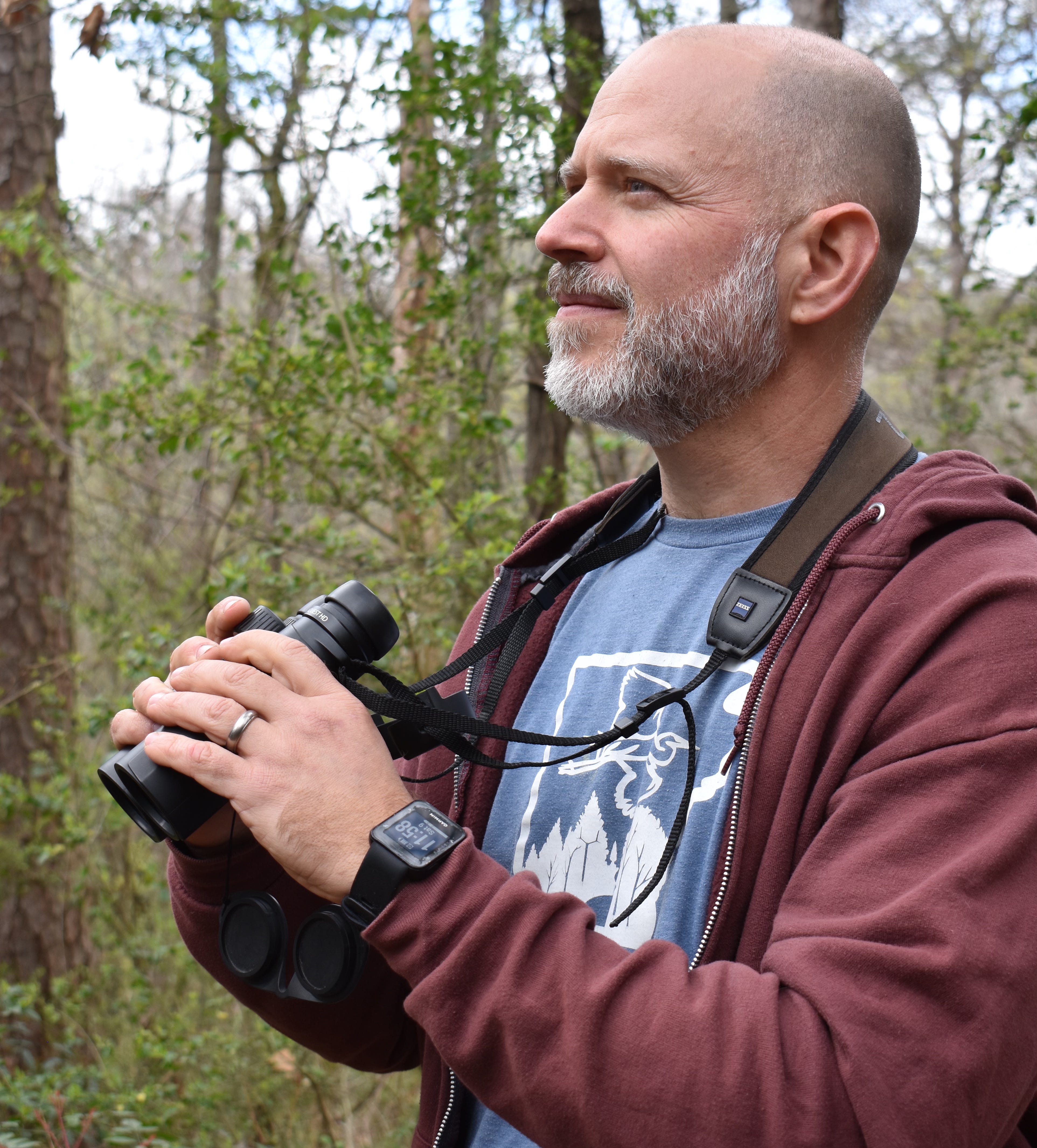
1. As you lay out in the book, birding is an attentional practice. How are spiritual practices attentional practices—and attentional practices also spiritual ones?
The first time I clued into this connection was by reading Simone Weil’s essay, “Reflections on the Right Use of School Studies with a View to the Love of God.” She says there that prayer consists of attention, and because of that, anything that can help strengthen our attention can be an aid to prayer. Weil offers studying math or a foreign language as her examples, but birds, for me, are a more inviting subject.
Attention, in its root meanings, is literally “to stretch toward.” There’s a sense of desire and attachment, of a longing for communion inherent in the act of attention. That is what the spiritual life is all about—the desire for God, a longing to be with God and to welcome God’s being with us. If we follow attention’s “stretch toward” all the way, no matter the object, then I think we’ll always end up at God.
2. Birds are welcomed into certain habitats; their arrival isn’t accidental. How is this also true of the spiritual life? What does it look like to tend a heart as a kind of habitat for the Spirit of God?
One of the things birders learn, and non-birders often don’t realize, is just how specific birds are about where they will live. Habitat preferences are rarely violated. What kind of habitat does God’s Spirit (which often appears as a bird in scripture) prefer? That’s a good question. “A contrite heart,” is one answer the bible provides and probably a good place to begin cultivating a habitat attractive to God’s spirit.
Birds also need enough quiet that they can sing. Studies have shown that many urban birds are louder than their rural cousins, but some birds simply won’t live in cities because of the noise. It’s the same with our hearts. Creating a quiet place will welcome a greater diversity of abundant life within us.
3. How do you account for a resurgence of interest in birds, as revealed in recent book titles?
The pandemic has a lot to do with it. People had to slow down, they couldn’t gather with others, and yet all around us birds were continuing their lives. It was the first time many had enough time and quiet to notice the abundance of wonderful creatures right around them. It wasn’t just cardinals and chickadees and crows—the common birds—but also Broad-winged Hawks, Semipalmated Plover, Prothonotary Warblers, and dozens of other species that could be seen with some time and effort at a local park or preserve.
Over the history of birding, tools like field guides have always helped expand the circle of birding. Now that comes in the form of apps. Learning bird songs is one of the hardest parts of birding and now Merlin can help anyone learn what once required years to master.
I think there is also something comforting in knowing that despite the uproar of our politics, the shifting of our culture, birds are continuing to follow their ancient migration paths, building nests, raising young, living with beauty. Watching birds can help remind us that there is more to the world than our human concerns, and more to God’s concern as well.
4. Say a little more about how birding changes our experience of time.
The lives of birds are tied into the cycles of the seasons in a way that most human lives are not, at least any longer. By becoming cued into the shifting patterns of birds’ lives, from nesting to migration, to wintering, and back again, allows birders to become reconnected to the cycles of creation. Summer, for me, is marked by Mississippi Kites, which arrive in my city in Arkansas from their wintering grounds in South America in late May. They are abundant in my neighborhood all summer, and a joy to watch (they are very acrobatic birds that catch flying dragon flies and cicadas), but then in September they’ll disappear again. The presence and absence of these kites is more concrete for me than a calendar full of squares.
5. How does one take a small step toward “considering the birds”? Should we all start by getting the Merlin app?
Merlin is helpful, but I do worry that it mediates the experience of birds and it is easy to become overly reliant on it. I’d start instead with a few bird feeders—one with seed, one with suet, and in the summer (at least in North America), a hummingbird feeder. Feeding birds brings them close and allows us to really get to know individual birds. Spend time just watching, noticing the differences, and then begin to use a field guide or Merlin to help you recognize the species that those differences mark. Beyond bird feeders, planting native plants can also be a wonderful act of hospitality, both for birds and many other creatures. Audubon has a plant finder that can provide some guidance for the right species for your area.
Ragan Sutterfield is an Episcopal priest serving a church in his native Arkansas. He is the author, most recently, of Watch and Wonder: Birding as a Spiritual Practice. Ragan writes regularly at “The Way We Practice” on Substack.
I will look for your book! It will be a great companion for
John Stott’s book about birding, The Birds, Our Teachers
My husband has a group of crows that he feeds ands interacts with, so far they have not been a murder, ;)
He feeds and talks to them and they leave him presents. When one sees him, it calls the others and they all come to see what he is doing.
I’ve started to think of the heart less as a container and more as a garden entrusted to our care. What we practice, welcome, and return to each day shapes what grows there, which makes spiritual formation feel less abstract and much more like daily stewardship.