
(No) Time to Rest
Debunking the timesaving promises of AI

I hope you’ll read all the way to the bottom to find a special invitation to help launch A Rule for the Rest of Us.
I recently read an article by David Brooks in The Atlantic, and the initial stats—about the effects of AI in the marketplace—are very disheartening. Though some might have predicted that AI would bring about the end of work as we’ve known it, computers running the world (if not ending it), the reality is quite different.
It seems our new AI tools are perhaps saving us time in the strictest sense of the word. They’re helping us work more efficiently. However, all that economized time seems not to have been re-invested in family dinners and coffees with friends, Sunday naps and earlier bedtimes, each of us recovering from our chronic exhaustion and perpetual sense of alienation.
Instead, we’re simply taking on new tasks. Productivity has increased but so have expectations. Every day of work must achieve more output, which means rest always seems to remain out of reach for the average worker. As Brooks writes, citing 2026 findings from ActivTrak, “When people adopted AI, their work life became more intense, not less.”
It’s perplexing to me how credulous we continue to be about technology’s promises of efficiency, as if efficiency itself were a synonym for rest. We imagine, quite foolishly, that finishing faster will allow us time to catch our breath. But finishing faster only creates more time for more work—or more empty time demanding to be anxiously filled.
As the technology critic Jacques Ellul argued, the faster we run, the more harassed we feel. In a world of technological sophistication, we feel as if we lag behind, chasing the vague figure on the horizon that we can no longer name. Money? Achievement? Recognition? As if these were meaningful goals, not poised to evaporate as soon as we grasp them in hand.
Rest has always been a means of resistance to the world’s system of valuing people instrumentally. This was true for the ancient Israelites, whose labor built the empire of ancient Egypt. But like them, many today lack the freedom to opt out of such a merciless system. They’re nickeled-and-dimed in a system that leaves them with a great deal of insecurity, especially in the United States where so many of us are one health crisis away from bankruptcy. When affordability is such a real problem, it can seem naïve and perhaps cruel to insist people rest more.
Still, every Christian should understand the value of God-given rest and want to work for a world where all can rest routinely from the labors of the week. When we consider the Sabbath command to rest one day of seven (setting aside relevant theological debates about interpreting this command), we might ask ourselves, not only about our own rhythms of rest, but about the efforts we’ve exerted to make possible the rest of neighbor’s. What money, what time have we given to create a world in which others can work and also take their hand off the proverbial plow?
I’ve been resting a little this summer, which feels like an important rhythm before the launch of my book on September 8th and with it, a full fall season of travel and speaking. (Note the picture from a recent week in Newfoundland with two friends!)

This season of rest has inspired me to invite others to guest post in this space in the weeks ahead so that I don’t have to come up with my own fanciful ideas. I know you’re going to enjoy these upcoming posts and the discovery of perhaps new-to-you writers.
I’m excited you’ll be hearing from Alyson Pryor about her book—Come Away and Rest: A Guide to Personal Spiritual Retreats. You’ll also be introduced to Ragan Sutterfield and his book, Watch and Wonder: Birding as a Spiritual Practice. And finally, you’ll learn from Grace Pate Pouch about her book, Savoring Childhood: Practical Wisdom for Slowing Down.
Before I disappear for the month, though, I have an important invitation to extend to you.
If you read in this space (and have even been reading regular posts like these for nearly ten years), you may wish to be a part of the small community of readers helping to launch A Rule for the Rest of Us into the world. You don’t need to be a social media influencer to join this effort. You only need to be a committed reader who likes to tell others about the books they’re enjoying.
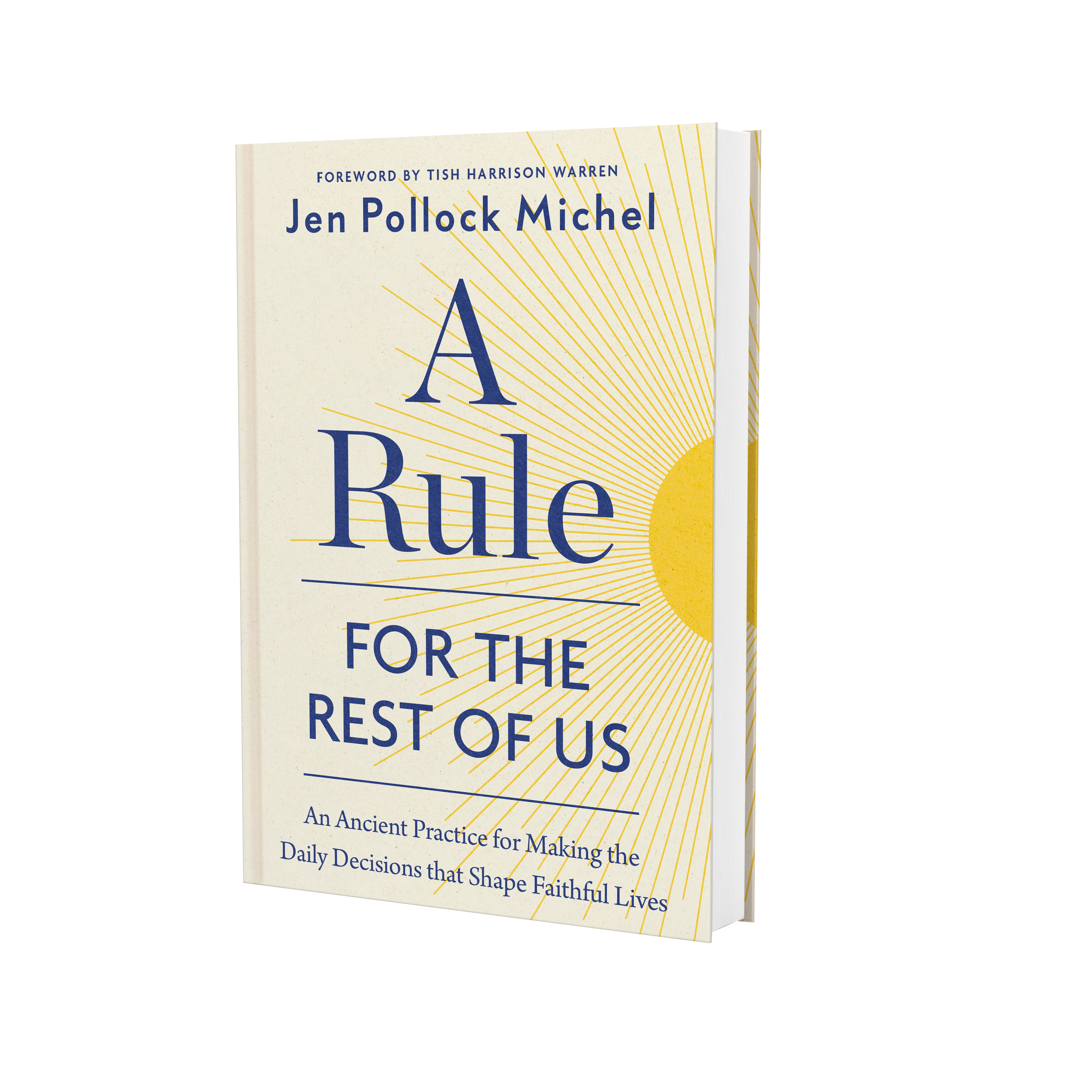
The obligations are minimal:
Preorder the book.
Review it honestly.
Help spread the word, as it feels right to you.
As an expression of my gratitude, I’d like to offer you:
An early galley of the book (arriving before your preordered copy)
An exclusive invitation to four (live and recorded) conversations in September with authors Tish Harrison Warren, Claude Atcho, Elizabeth Woodson, and Brad East
Personalized help with writing your rule of life in my October office hours
If any of this sounds interesting, you can learn more about the book here (and read the first chapter for FREE), preorder your copy here, and sign up for the launch team here.
Thanks in advance for considering!
They told us the vacuum and the dishwasher would save us gobs of time too, that we'd have so much leisure time it would become a problem...and look where that led!
Anyways, I'm so excited to read your book, and I'm happy to help you promote it!
Wow! This is so skillfully written and addresses a topic of utmost importance, regardless of your life stage. I couldn’t put it down and eagerly anticipate reading the rest!