
Advent Meditation
A story about memory and mercy

We are home from church, on the second Sunday of Advent, and I am making grilled cheese for lunch. My mother hovers around the kitchen island, as she usually does each week, asking if she can help. Alzheimer’s plays mean games with her memory, but in the kitchen, it does not steal from her the sense that work is underway and help is needed.
“Do you want to get yourself a glass of water?” I suggest. After our move to Cincinnati, when it became routine to take her to church and invite her to lunch afterwards, I used to give her the job of setting the table. But it’s since become much too difficult to know spoon from fork, fork from knife, much less to understand how to count and distribute plates. Still, I want to honor this desire to help. I want to recognize that recognizably human—and Jan—part of her that wants to serve.
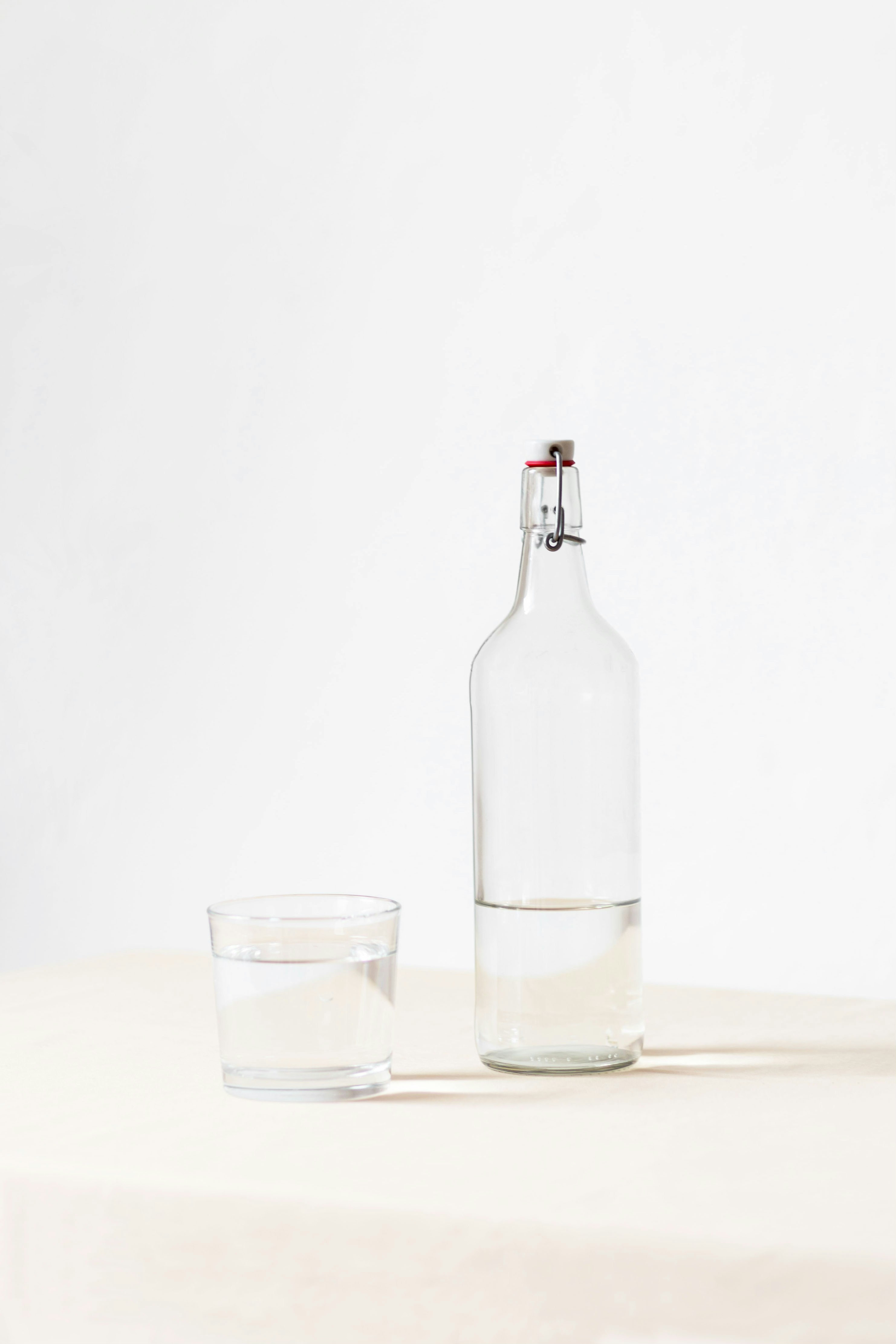
Yet even pouring herself a glass of water is becoming too difficult for her now. She can’t find a glass when I point in the direction of the cabinet. When she finds the cabinet, the glasses are difficult to reach. When I then direct her toward the refrigerator, on the opposite wall, she cannot sustain enough train of thought to remember where she’s headed, three steps into the small pilgrimage. Finally arrived at the refrigerator door, she can grasp at nothing to remind her that the freezer is on the left, the refrigerator is on the right.
“Open the door on the right,” I say, watching her confusion, uncertain whether she’ll remember right from left. She pauses, thinks, grabs the appropriate handle, and heaves with as much strength as she can muster.
“See the glass bottles on the door? They’re filled with cold water.” She pauses, thinks, then takes a bottle and turns to set it on the island. But the mechanism of lifting the small cork from the neck of my cheap Ikea tableware is strange, its meaning hidden. At this point, I leave the grilled cheese and open the bottle for her.
“Do you want ice?” I ask. Knowing her answer before it’s spoken, I debate whether I will assign her the job of finding the freezer or whether, in greater efficiency, I’ll simply do it for her.
The grilled cheese is now golden and gooey, and I have made everyone’s to order. Do you want bacon? Do you want spinach? Do you want grilled onions? I’d yelled the menu suggestions up the stairs to my teenage boys who, lacking my mother’s propriety, have not recognized that work was underway in the kitchen and help was needed. But I hadn’t asked my mother, hovering at the island, because I thought I knew her preferences.
This is my job, of course, in this season of her decline. To be a kind of understudy of the woman who gave me birth and is losing her language. Her strong preferences are not forgotten, even if she can no longer manipulate the words to communicate them. Instead, I do the talking, the acting, the anticipating for her.
When I pick her up for church on Sunday mornings, I know she will be cold—so I make sure she is wearing a sweater. I know she will want to wear her red lipstick—so I apply it, before we leave her apartment. I know she will be thirsty—so I will pour a glass of water for her in the lobby, as soon as the elevator doors groan open. I know she will find the sun bright as soon as we alight from the building—so I offer her the sunglasses I’ve tucked in my purse. I am a kind of external memory or hard drive, trying to run the programs that are familiar and comfortable, even when she can no longer initiate those herself.
So when I make a grilled cheese for my mother, with bacon and spinach and grilled onions (her favorites!) I am as surprised as I am horrified to find her picking all these goodies out of her sandwich once we’re seated and Ryan is reading from the Advent section of Claude Atcho’s Rhythms of Faith. For the patience I exercise in many things, when I see my mother’s fingers in her food, I become a scold.
Don’t put your fingers in your food, I am prone to say, a little too forcefully. I say it when she tries peeling blueberries with the nail of her index finger. I say it when she is foraging peppers from her soup. I say it when she is scraping the small disk of a cucumber in the effort to remove any remaining peel.
But on this second Sunday of Advent, when my mother’s fingers are plunged into the gooey center of her grilled cheese, I say nothing, at least at first. Yes, admittedly, I toss a grimace around the table, everyone understanding that if mom is going to lose it, it’s going to be at this moment when table courtesies are completely abandoned. And I do seek a bit of clarification for the sudden disinterest in her favorite vegetable.
“You love spinach!” I insist. Just three years ago, she’d ordered spinach scrambled eggs every morning for breakfast.
“Well, I don’t like it now,” my mother says emphatically. She perseveres in the sandwich rescue mission, oblivious to her audience. Soon, spinach has found its way on the back of her hand, on the second knuckle of her index finger, on her cheek. Spinach is a contagion, and there is no containing it. But I have to hand it to her: she is persistent, not letting a single wilted leaf of toxic green remain.
As I watch the drama of spinach removal unfold, Ryan reads aloud the truth we’re to learn about Advent, that “Advent is the time to think about the slowness of God.”1
“God is slow because God is love . . God’s promises seem slow because he is expanding the borders of his family; he is so active in giving mercy to the ungodly that he wants to take his time, bringing more and more into Christ’s saving embrace.”2
In Advent, we enter the expectant waiting and watching for the coming of God, who has come and will come again. But it seems he lingers. Tarries. Chooses to be slow in his coming. So, we learn not just to wait for God but to wait patiently. And we don’t just wait patiently. We become patient in our waiting and watching.
My mother now has every offensive shred of spinach (and cheese) removed from her sandwich—and she is delighted by the result. “This is soooo good,” she says, and I am sure of what she will add to the compliment. “But everything you make is good.” I am, in her opinion, the world’s best cook. Here, too, I cast a glance around the table, to make sure people are paying close attention.
On the second Sunday of Advent, I have not scolded my mother for her poor table manners. This is a miracle. I suppose it’s a reminder that when we keep time with our slow and patient God, we enter—graciously, ineluctably—into his mercy.
Claude Atcho, Rhythms of Faith (Colorado Springs: Waterbrook, 2025), 17.
Ibid.
I found myself smiling through so much of this. Just beautiful!
I love how you are loving her. Thank you for sharing this journey with us.